Month: July 2020

  • Bookkeeper360 Review 2023

    bookkeeping 360

    It can update your books even if they’re way behind, but you have to tell your dedicated bookkeeper during the first meeting so that they know where to start. The direct cost column chart above is another chart that you’ll find very useful in costing. What we like about this chart is that you can see the cost behavior of different cost drivers in the business. For instance, we see consistent labor costs throughout the year except in July.

    bookkeeping 360

    At SME, we help clients in handling financial records efficiently and assist businesses with bookkeeping services monthly, quarterly and annually. The services the two providers offer are very similar, but Bookkeeper360 allows for more customization of its features, as well as a pay-as-you-go plan. It also has both accrual and cash-based accounting, whereas Bookkeeper.com only offers cash-based accounting. The CFO will help in determining and evaluating key performance indicators, performing profitability analysis, developing a growth strategy, and optimizing cash flow. If you’re planning to expand your business but need additional capital, the CFO will help you forecast the business’s financials, craft business plans, and determine the optimal capital structure. Bookkeeper360 offers a range of support options for businesses in conjunction with its core bookkeeping services. From bookkeeping to payroll, to tax and CFO advisory, we provide a complete set of financial solutions for your business.

    Highly recommend the bookkeeping company to anyone thinking of starting a company. They are great at what they do.

    For more than 25 years, Bookkeeper.com has billed itself as an all-in-one small business solution, covering several aspects of a business in one package. Its team of financial specialists provides a full range of accounting, bookkeeping, consulting, payroll, and business services. bookkeeper360 It also has QuickBooks ProAdvisors who will manage your books with either QuickBooks Desktop… For CFO advisory services, Bookkeeper360 provides business and financial plans, projections and forecasts, entrepreneur coaching, corporate governance, and capital deployment strategy.

    • If you get any plan from Bookkeeper360, the app is included in the package.
    • With the help of some formula fields and a process builder, it automatically sets the “Next Work on Date” once a recurring task was completed for its weekly or monthly frequency.
    • Our 100% US-based team utilizes technology to manage your accounting with a personalized touch.
    • Our partners cannot pay us to guarantee favorable reviews of their products or services.
    • The columns represent the volume of cash inflows and outflows while the line shows your net cash position.

    Aside from bookkeeping services, Bookkeeper360 offers a web-based app that summarizes your data from QuickBooks or Xero and transforms it into visually-appealing charts and graphs. At $19 per month, you can https://www.bookstime.com/ keep track of your business performance directly from the app after integrating it with your QuickBooks Online or Xero account. If you get any plan from Bookkeeper360, the app is included in the package.

    You’re our first priority.Every time.

    One of these services is its CFO Advisory services, in which you work with the Bookkeeper360 team to analyze your financials and determine a strategy to manage and grow your business. Like with its virtual bookkeeping services, the CFO Advisory support Bookkeeper360 offers is available in three different plans, as well as on a custom-package basis. Today, Bookkeeper360 announced the completion of its seed capital raise round. This round was filled by new strategic partners, customers, and previous investors of Bookkeeper360, who are also Angel Investors of Etsy.com. Bookkeeper.com offers four subscription plans, which range in price from $399 to $799 per month, depending on the number of monthly transactions and frequency of service.

    We selected it as the best online bookkeeping service for businesses wanting a full-service accounting firm—it’s ideal for businesses looking to outsource their bookkeeping. On top of its core online bookkeeping services, Bookkeeper360 offers additional solutions for functions like payroll, taxes and HR.

    Check out what our customers are saying

    To see if it’s truly a fit for your business, read our review of Bookkeeper360. You can also reach out to your dedicated adviser through the Tasks section, which eliminates the need to email your bookkeeper if you have questions. Instead, you can create a task for your bookkeeper, set a due date, and wait for them to get back to you. This feature is comfortable because the communication happens within the Bookkeeper360 interface. Fit Small Business content and reviews are editorially independent.

    • All financial products, shopping products and services are presented without warranty.
    • You can also change it per quarter and present it as trailing 12 months, trailing 24 months, or previous calendar years.
    • We think that very small businesses with limited budgets might find their services expensive.
    • You can use this year-over-year comparison to spot seasonality in revenues and expenses.
    • This includes three new directors that have joined to oversee its software engineering, advisory, and customer onboarding departments.
    • Ultimately you can choose services that range from advisory support to full, hands-on bookkeeping management.

    You don’t have time to clean up messy books or deal with the IRS notices that result from inaccurate tax filings. Suppose you’re switching jobs if you were furloughed because of the pandemic or you’re simply searching for greener pastures.

    You can now collect & reconcile payments directly from your accounting software!

    If you need help, you can call them via phone or set up unlimited meetings with your dedicated bookkeeper. Bookkeeper360 offers several different services and solutions for business owners — and, because of the variety of its services, the ultimate cost of working with Bookkeeper360 will also vary. Bookkeeper360 offers tax services that include individual or business preparation and filings, sales and local 1099s reporting, as well as overall tax planning and compliance. The three CFO Advisory plans are called “Advisory,” “Coaching” and “Inventory.” The Advisory plan includes services such as KPI reporting, profitability improvements and basic operational processes. The Coaching plan is more in-depth, not only providing assistance with overall systems and operations but also strategic planning and executive coaching. Finally, the Inventory plan is designed on a project basis and can accommodate inventory management, workflow planning, inventory projections and reorder points.
    bookkeeping 360

    You can also immediately abnormal fluctuations in numbers and investigate the reason for these fluctuations further. New customers can get 20% off of their monthly service charge for the first three months. Bookkeeping.com is a great Bookkeeper360 alternative if you already use QuickBooks and prefer pricing based on transactions. ADP. It also gives you the option to integrate Xero with these different solutions to sync your payroll data. Bookkeeping is the core service that Bookkeeper360 offers and is available by signing up for a consultation with its U.S.-based team. Xero — and you’ll be able to work collaboratively online with your bookkeeper to manage your business finances.

  • Is Accumulated Depreciation a Current Asset?

    Accumulated depreciation

    As a result, companies must recognize https://online-accounting.net/, the sum of depreciation expense recognized over the life of an asset. Accumulated depreciation is reported on the balance sheet as a contra asset that reduces the net book value of the capital asset section. This means that, regardless of when the actual transaction is made, the expenses that are entered into the debit side of the accounts should have a corresponding credit entry in the same period.

    • Depreciation Expense ChargedDepreciation is a systematic allocation method used to account for the costs of any physical or tangible asset throughout its useful life.
    • Accumulated depreciation is a contra account to a long-term asset, meaning it shows as a negative balance directly below the asset and is subtracted from the asset’s original cost.
    • It also gives them an idea of the amount of depreciation costs the company will recognize in the future.
    • In general, accumulated depreciation is calculated by taking the depreciable base of an asset and dividing it by a suitable divisor such as years of use or units of production.

    This cost allocation method agrees with thematching principlesince costs are recognized in the time period that the help produce revenues. Accumulated depreciation is the depreciation expense your company takes each year summed together for every year since the asset was purchased or placed into service.

    Example of Accumulated Depreciation

    Businesses have fixed assets that continue to be useful for many years. We capitalize such assets to match the expense of the asset to the total period it proves economically beneficial to the company. Accumulated depreciation refers to the total expense affixed to a fixed asset from the date it was put to use. Under MACRS, the IRS assigns a useful life to different types of assets. For example, office furniture is depreciated over seven years, automobiles get depreciated over five years, and commercial real estate is depreciated over 39 years.

    The methods used to calculate depreciation include straight line, declining balance, sum-of-the-years’ digits, and units of production. Simultaneously, each year, the contra asset account or Accumulated depreciation will increase by $10,000. So, at the end of 3 years, the annual depreciation expense would still be $10,000. In this way, accumulated depreciation will be credited each year while the asset’s value is simultaneously written off until it is disposed of or sold. Once purchased, PP&E is a non-current asset expected to deliver positive benefits for more than one year.

    AccountingTools

    Depreciation allows a company to transfer a specified portion of the asset’s cost from the balance sheet to the income statement. Depreciation expense appears on the income statement, while the cumulative effect of this expense appears as accumulated depreciation on the balance sheet.

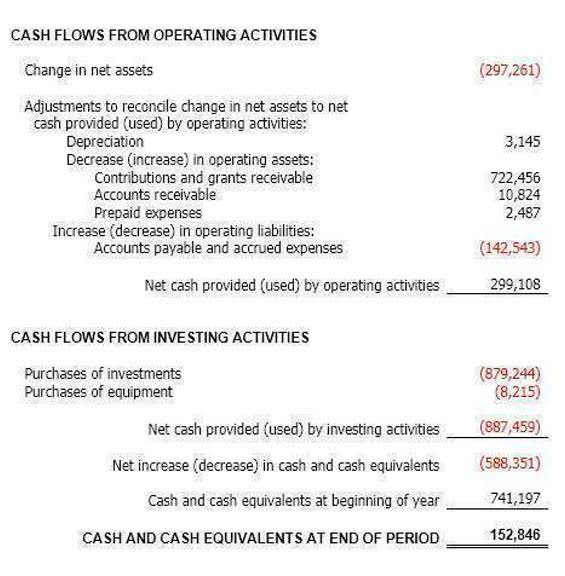
    2021 Financial Statement – Park Rapids Enterprise

    2021 Financial Statement.

    Posted: Wed, 04 Jan 2023 08:00:00 GMT [source]

    To illustrate, here’s how the asset section of a balance sheet might look for the fictional company, Poochie’s Mobile Pet Grooming. Explain the purpose of depreciation and compare different methods of accounting for it. Study the accumulated depreciation definition and understand how it works with an example. To do the straight-line method, you choose to depreciate your property at an equal amount for each year over its useful lifespan. Accounting 10 Tax Deductions To Do Now That Will Save Your Small Business Money This Tax Season Are you unsure about which business expenses to write off in order to save your money?

    Join PRO or PRO Plus and Get Lifetime Access to Our Premium Materials

    In this method, you depreciate an asset at an equal amount over each year across its useful life. Typically, there’s an original basis for every asset you have in use, equal to the original purchase price. Then, there’s accumulated depreciation or the value lost in the asset, which is considered an expense on your books. Since depreciation is defined as the allocation of an asset’s cost based on the estimated useful life, the book value of the asset is not an indication of the asset’s market value. For example, a building in an excellent location may be increasing in value even though the accumulated depreciation is increasing and therefore the book value is decreasing. The purpose of depreciation is used to match the timing of the purchase of a fixed asset (“cash outflow”) to the economic benefits received (“cash inflow”).

    • Accumulated depreciation is recorded in a contra asset account, meaning it has a credit balance, which reduces the gross amount of the fixed asset.
    • Other elements that could play a part in affecting the ratio include the firm’s financial ability to replace worn machinery and equipment.
    • It is credited each year as the value of the asset is written off and remains on the books, reducing the net value of the asset, until the asset is disposed of or sold.
    • In this way, accumulated depreciation will be credited each year while the asset’s value is simultaneously written off until it is disposed of or sold.

    On most balance sheets, accumulated depreciation appears as a credit balance just under fixed assets. In some financial statements, the balance sheet may just show one line for accumulated depreciation on all assets. Accumulated depreciation can be defined as the total amount of depreciation for a fixed asset that is charged to expense since that asset was acquired and made available for use. This means it is a negative asset account that offsets the balance in the asset account to which it is usually linked. Accumulated depreciation appears on the balance sheet as a reduction from the gross amount of fixed assets reported. It is usually reported as a single line item, but a more detailed balance sheet might list several accumulated depreciation accounts, one for each fixed asset type.

    Tax Deductions To Do Now That Will Save Your Small Business Money This Tax Season

    This calculator will help you find the total depreciated value in real-time. Irrespective of the method used for calculating depreciation, the recording for accumulated depreciation includes both a credit and a debit. That’s because you’re required to make a debit to depreciation expense and a credit to accumulated depreciation. Still, there are two methods primarily used for the calculation – straight line and double-declining balance.

    The value of the asset on your business balance sheet at any one time is called its book value – the original cost minus accumulated depreciation. Book value may be related to the price of the asset if you sell it, depending on whether the asset has residual value. Financial analysts will create a depreciation schedulewhen performing financial modeling to track the total depreciation over an asset’s life. The four methods allowed by generally accepted accounting principles are the aforementioned straight-line, declining balance, sum-of-the-years’ digits , and units of production. If an asset is sold or disposed of, the asset’s accumulated depreciation is removed from the balance sheet. Net book value isn’t necessarily reflective of the market value of an asset. Accumulated depreciation is recorded as a contra asset that has a natural credit balance .

    As the asset ages, its corresponding accumulated depreciation account increases. Accumulated depreciation is a contra-asset account used to record asset depreciation. Accumulated depreciation is the total amount of depreciation expense that has been allocated to an asset since it was put in use.

    What is accumulated depreciation example?

    For example, let's say an asset has been used for 5 years and has an accumulated depreciation of $100,000 in total. After the 5-year period, if the company were to sell the asset, the account would need to be zeroed out because the asset is not relevant to the company anymore.